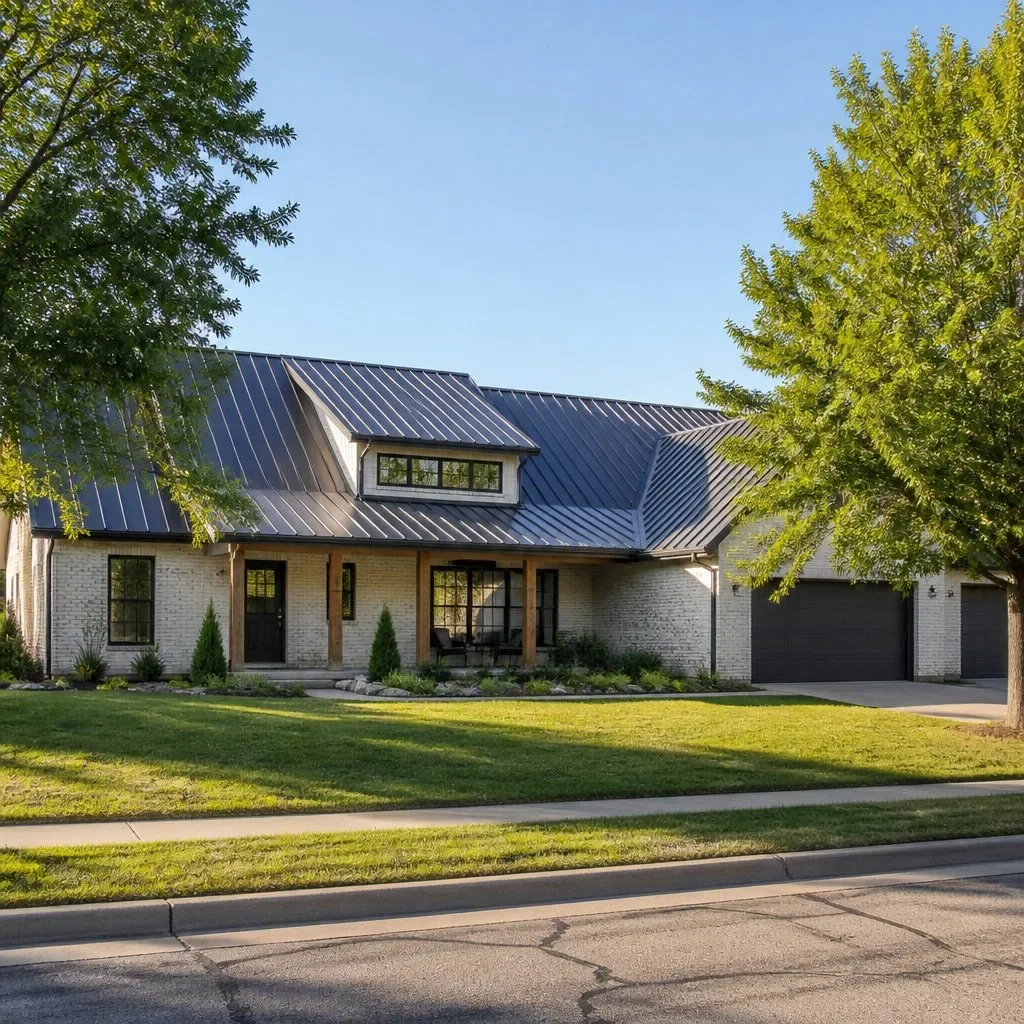
If you've driven through Andover, Derby, or out toward El Dorado lately, you've probably noticed more standing-seam metal roofs popping up on homes that used to have plain old asphalt shingles. That's not a coincidence. After a few rough hail seasons in a row, a lot of Wichita-area homeowners have gotten curious about metal roof panels — and whether they're actually worth the higher price tag.
Short answer: for a lot of homes here, yes. But "worth it" depends on what you're trying to solve, how long you plan to stay in the house, and what kind of metal roofing you're actually comparing against shingles. Let's break down what matters.
What Are Metal Roof Panels, Exactly?
"Metal roofing" isn't one product — it's a category, and the differences matter more than most homeowners realize going in.
Standing-seam panels are the clean, modern-looking option with raised vertical seams and no exposed fasteners. These are the ones that run $9–$16+ per square foot installed and last 40-70 years with minimal maintenance. This is what most people picture when they say "metal roof."
Exposed-fastener panels (sometimes called corrugated or ag-panel style) are cheaper — often $5–$9 per square foot — but the screws are visible on the surface, and those screw gaskets wear out over time and need re-tightening or replacement every 10-20 years.
Metal shingles mimic the look of traditional shingles or tile but with metal's durability. These split the difference on price and are popular when homeowners want the hail resistance without the "barn roof" look.
For most residential jobs we do around Wichita, standing-seam is the recommendation if budget allows. It's the version that actually delivers on the "install it once, forget about it" promise.
Why Wichita Homeowners Are Actually Considering This
Let's be honest about what's driving the search volume on this topic: hail. Kansas sits in one of the most hail-active regions in the country, and most of us have filed at least one roof insurance claim in the last five years. When you've replaced an asphalt roof once because of storm damage, the math on metal starts looking different.
A quality metal roof carries a Class 4 impact rating, which is the highest hail-resistance rating that exists. That doesn't mean a metal roof is indestructible — a big enough hailstone will still dent it — but it dramatically reduces the odds you're filing another full-replacement claim five years after your last one. Some insurance carriers in Kansas also offer premium discounts for Class 4 roofing, which is worth asking your agent about directly.
There's also the heat factor. Wichita summers are brutal, and metal roofing reflects a meaningful amount of solar heat compared to dark asphalt shingles, which can translate into a noticeably cooler attic and a few less-painful cooling bills in July and August.
The Real Cost Conversation
Here's where we'll be straight with you instead of just selling the upside: metal roofing costs more upfront than asphalt shingles, usually 2-3x as much installed. On an average Wichita-area home, that's often the difference between a $10,000-$14,000 shingle replacement and a $20,000-$35,000 standing-seam metal roof.
The payoff is lifespan and reduced maintenance. Asphalt shingles in this climate typically need replacement every 20-25 years (often sooner after a bad hail year). A properly installed standing-seam metal roof can last 2-3x longer than that, which changes the long-term cost picture — especially if you're planning to stay in the home for a decade or more.
If you're planning to sell within the next few years, the math is less clear-cut. Metal roofing does add resale value, but it rarely recoups 100% of the cost difference versus a quality shingle job at closing.
What Actually Goes Wrong With Metal Roof Installs
Most of the horror stories we hear about metal roofing aren't about the material — they're about installation mistakes. A few things worth asking any contractor before you sign:
- Panel expansion and contraction. Metal expands and contracts with temperature swings, and panels need to be fastened with clips that allow for that movement. Installers who fasten panels too rigidly end up with buckling or oil-canning (visible waviness) within a year or two.
- Underlayment and ventilation. Metal roofing needs proper underlayment and attic ventilation to avoid condensation issues underneath the panels. This is a step that gets rushed on lower-bid jobs.
- Flashing details. Valleys, chimneys, and penetrations are where most roof leaks start, metal or otherwise. The quality of flashing work matters more on a 50-year roof than a 20-year one, since you're not getting a do-over in a decade.
If a contractor can't walk you through how they handle these three things specifically, that's worth a follow-up question before you commit.
Is Metal Right for Your Home?
Metal roofing tends to make the most sense if you're planning to stay put long-term, you've had repeat hail damage, or you want to reduce how often you're thinking about your roof at all. It makes less sense if you're prepping a home for a near-term sale or working with a tighter renovation budget where a quality shingle roof covers the need just fine.
We've installed and repaired roofs across Andover, Derby, Maize, and the rest of the Wichita metro long enough to know there's no one-size answer here — it depends on your roof's age, your home's specific hail history, and what you're optimizing for.
If you're weighing metal against a standard shingle replacement, the best next step is getting actual numbers for your specific roof rather than guessing from averages. We'll walk your roof, give you honest pricing on both options, and tell you straight which one makes sense for your situation — no pressure either direction.
Ready to find out what metal roofing would actually cost on your home? Contact Wheatland Construction for a free roof assessment, and we'll give you real numbers instead of a sales pitch.