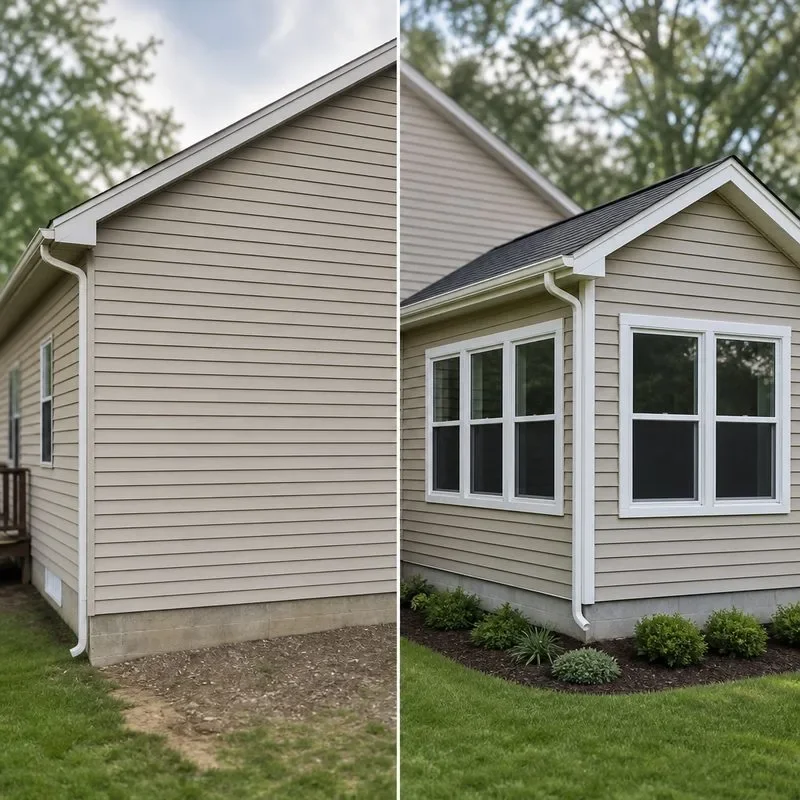
If you've outgrown your house but love your neighborhood, you're not alone. Across Andover, Derby, Maize, and the rest of the Wichita metro, more homeowners are choosing to build out instead of move out. A well-planned home addition can give you the space you need without the hassle of selling, searching, and relocating — but it only works out that way if you go in with realistic expectations.
Here's what actually matters when you're planning a home addition in the Wichita area.
Why Homeowners Choose an Addition Over Moving
Wichita's housing market has tightened up over the past few years, and moving costs — realtor fees, closing costs, a new mortgage rate — add up fast. For a lot of families, it's cheaper and less disruptive to add a bedroom, expand the kitchen, or build out a family room than to start a new home search from scratch.
Additions also let you keep what you already like: your school district, your neighbors, your yard, your commute. You're just fixing the one thing that doesn't work — not enough room.
Types of Home Additions We See Most Often
Not every addition looks the same, and the type you choose has a big impact on cost and timeline.
Bump-out additions extend an existing room by a few feet — often used to widen a kitchen or add space to a primary bedroom. These are usually the least expensive option since they don't require a full foundation in most cases.
Room additions add an entirely new space, like a bedroom, home office, or in-law suite. These require a full foundation, framing, roofing tie-in, and complete mechanical work (plumbing, electrical, HVAC extension).
Second-story additions build up rather than out — a good option on a smaller lot where you don't have room to expand the footprint. These are more involved structurally since the existing foundation and framing have to support the added weight.
Sunrooms and three-season rooms are a lighter-lift option if you want more living space without full HVAC integration, though many Wichita homeowners choose to condition them year-round given our summer heat and winter cold.
What Drives the Cost of a Home Addition in Wichita
A few factors move the needle more than anything else:
- Foundation work. If your addition needs a new foundation, that's a significant chunk of the budget before framing even starts.
- Rooflines. Tying a new roof into your existing roofline cleanly takes skilled framing — done wrong, it leads to leaks down the road.
- Mechanical systems. Extending plumbing, electrical, and HVAC into a new space is often more expensive than people expect, especially if the addition is on the opposite side of the house from existing lines.
- Finish level. A bare-bones bonus room costs a lot less than a custom addition with vaulted ceilings, custom cabinetry, and high-end flooring.
Wichita's climate also plays a role. Proper insulation and a roofline that sheds snow and handles our wind matter more here than in milder climates, and cutting corners on either one shows up as higher utility bills or water damage within a few years.
Permits and Local Requirements
Most home additions in Wichita and surrounding cities like Andover, Bel Aire, Augusta, and Goddard require a building permit, and some require separate electrical and plumbing permits depending on scope. Setback requirements — how close your addition can be to your property line — vary by city, so what's allowed in unincorporated Sedgwick County may differ from what's allowed inside Wichita city limits.
This is one of the most common places projects get delayed: homeowners assume a permit isn't needed for a "small" addition, or they don't realize their city has stricter setback rules than they expected. A contractor familiar with local codes across the metro should handle this upfront, before any framing starts — not after an inspector flags it.
How Long Does a Home Addition Actually Take?
Timelines depend heavily on scope, but a realistic range for most additions in the Wichita area runs anywhere from 6 to 16 weeks once permits are approved — permitting itself can add another few weeks depending on the city. Weather is a factor too; foundation and framing work slows down during Kansas's wetter spring stretches and can pause during extreme winter cold snaps.
Anyone promising a full room addition in two or three weeks is either talking about a very small bump-out or setting expectations that won't hold up.
Addition vs. Remodel: Which Do You Actually Need?
Sometimes homeowners come to us wanting an addition when what they actually need is a better use of existing space. If your kitchen remodeling could gain 150 square feet of functional space just by reconfiguring a wall, that may be a faster, cheaper path than a full addition. The same goes for basement finishing — if you have an unfinished basement, that square footage might solve your space problem without touching your home's footprint at all.
It's worth having an honest conversation about this before committing to the cost and timeline of a full addition.
What to Look for in a Contractor
Home additions involve more trades working together than almost any other remodeling project — framing, roofing, electrical, plumbing, HVAC, and finish work all have to coordinate. A contractor who's done custom home building in the Wichita area understands how to sequence these trades so your addition ties into your existing home cleanly, inside and out.
Ask to see completed additions, not just new construction — tying into an existing structure is a different skill set than building from a flat lot.
Ready to Talk Through Your Addition?
If you're weighing a home addition against other options, or you're ready to start planning one, Wheatland Construction works with homeowners across Wichita, Andover, Derby, Maize, Augusta, and the surrounding area on additions of every size. We'll walk your property, talk through what's realistic for your budget and timeline, and give you a straight answer — even if that answer is "a remodel would serve you better." Reach out to get started.